How to Choose the Best Walking and Running Shoes
Find your perfect walking or running shoes. Avoid injuries, save money, and boost performance with our expert guide.
Ever felt knee pain after a walk? Or noticed your shoes wearing out way too fast? This happens to 68% of people who pick the wrong footwear for their activities.
Truth is, wearing the wrong shoes doesn't just affect your comfort. It can cause serious injuries like plantar fasciitis, tendonitis, and even spine problems. Worse yet, many folks think any athletic shoe works for walking or running.
In this complete guide, you'll discover exactly how to choose the perfect shoes for your needs. I'll show you the real differences between walking and running models, how to identify your foot type, and which technical features actually matter.
With the right information, you'll avoid wasting money, prevent injuries, and improve your performance in every workout. Get ready to transform your exercise experience.

Summary
- Why the Right Shoes Make All the Difference
- Essential Differences: Walking vs Running Shoes
- How to Identify Your Pronation Type
- 5 Technical Features You Need to Evaluate
- Fatal Mistakes That Hurt Your Joints
- Size Guide: How to Get the Perfect Fit
- Maintenance: Extend Your Shoes' Lifespan
- Frequently Asked Questions
- Conclusion
Why the Right Shoes Make All the Difference
Many people think choosing shoes is simple: they just need to look good and feel comfortable when trying them on. This mindset gets expensive. Literally.
Research shows that wearing improper footwear increases your injury risk by 39% during physical activities. That means pain, medical bills, and time away from your workouts.
The Real Impact on Your Joints
During walking, your body absorbs forces of about 1.5 times your weight with each step. When running, that impact jumps to three times your body weight. Without proper cushioning, your joints take the hit.
Your knees feel it first. Then come the ankles and hips. Over time, your spine starts complaining too. All because the shoes aren't distributing impact correctly.
Real benefits of choosing the right shoes:
- 52% reduction in risk of developing plantar fasciitis
- 30% improvement in stride efficiency
- Save up to $800 annually on medical treatments
- 40% increase in motivation to maintain regular workouts
- 2x longer shoe durability when used appropriately

How Wrong Shoes Affect Your Performance
Ever felt more tired than you should after a workout? Inadequate shoes force your body to work harder to compensate for lack of support.
This happens because your muscles end up doing the work the footwear should do. It's like driving a car with half-engaged brakes: you'll get there, but you'll burn way more fuel.
Plus, constant discomfort breaks your concentration. You spend more time thinking about pain than enjoying the exercise. Result: less pleasure, fewer results.
If you're interested in improving your entire activity routine, check out our guide on how to optimize your performance with the right gear. For those serious about tracking their workouts, our fitness smartwatch recommendations can help you monitor your progress effectively.
Essential Differences: Walking vs Running Shoes
Understanding the differences between walking and running shoes is crucial for making the right choice. Though they look similar, each type has specific characteristics to meet distinct demands.
Walking Shoes: Built for Comfort
Walking shoes are designed for long hours of use with moderate impact. Since walking involves touching the ground heel-first and rolling your foot to your toes, the design reflects this.
The main structure includes a more rigid sole that offers a stable base. Cushioning is distributed evenly throughout the foot, not concentrated in specific points like in running shoes.
Key characteristics of walking shoes:
- Sole with flexibility only in the toe region
- Weight typically between 10-11.5 ounces
- Average drop of 10-12mm for heel comfort
- More robust and durable upper
- Focus on lateral stability to prevent ankle rolls
This type of shoe works exceptionally well for people who walk daily for 30-60 minutes. The superior durability compensates for the slightly heavier weight.
Running Shoes: Optimized for Impact
When you run, the story changes completely. The impact is much more intense, often up to three times your body weight with each stride. Your foot hits the ground with 2-3x the force compared to walking.
That's why running shoes have more sophisticated cushioning, especially in the heel. Shock absorption technologies are more advanced: gel, special foams, and spring systems.
Key characteristics of running shoes:
- Weight between 7.5-10 ounces for better efficiency
- Cushioning concentrated in high-impact areas
- Flexible sole throughout for fluid movement
- Breathable, lightweight mesh upper
- Energy return technologies for better performance
Running shoes also have a natural curve in the sole called a "rocker." This facilitates forward foot roll, making your stride more efficient and less tiring.
For those building a complete training setup, check out our muscle gain workout guide to complement your cardio routine.
How to Identify Your Pronation Type
Knowing your pronation type is the starting point for choosing the ideal shoes. There are three main types: neutral, overpronation, and supination. Each requires specific footwear characteristics.
Neutral Pronation: The Ideal Pattern
Neutral pronation means your foot rolls about 15 degrees inward when striking the ground, distributing weight evenly. It's considered the most biomechanically efficient.
About 50% of people have neutral pronation. If you're one of them, you're in luck: most shoes on the market are designed for this pronation type.
Signs of neutral pronation:
- Even wear in the central region of the outsole
- Absence of frequent ankle pain
- Easy to maintain balance while running
- Medium-height arch
For neutral pronation, look for shoes with balanced cushioning and moderate support. You don't need special corrections, just comfort and adequate impact absorption.
Overpronation: When the Foot Rolls Inward
In overpronation, your foot rolls excessively inward after touching the ground, typically associated with a roll angle of more than 15 degrees. This overloads the inner part of your foot and ankle, potentially causing injuries over time.
Approximately 60% of runners have some degree of pronation. It's not necessarily a problem, but it requires attention when choosing shoes.
Signs of overpronation:
- Wear concentrated on the inner part of the outsole
- Frequent pain in the knee or inner ankle
- Lower arch (flat feet or tendency)
- Difficulty maintaining a straight line when running
For overpronation, you need shoes with stability control. They have reinforcements on the inner side that prevent excessive foot roll. Brands like ASICS, Mizuno, and Brooks have specific lines for overpronators. If you're dealing with related issues, our tendonitis guide might be helpful.
Supination: When the Foot Rolls Outward
Supination is less common, affecting about 10% of people. In this pattern, the foot doesn't roll inward enough, staying more on the outer edge throughout the movement.
This concentrates impact on the outer edge of the foot, increasing the risk of ankle sprains and lateral ligament injuries.
Signs of supination:
- Heavy wear on the outer part of the outsole
- Higher incidence of ankle sprains
- Very high arch (cavus foot)
- Feeling of instability when running
For supination, seek shoes with extra cushioning and flexibility. Avoid models with stability control, as they can worsen the situation. Focus should be on maximum shock absorption.

Simple At-Home Test
Completely wet the sole of your foot and step on a surface that shows the print (paper, cardboard, or dark floor). Observe the mark:
- Visible, well-defined arch: Neutral pronation
- Almost complete foot print: Overpronation
- Very pronounced or broken arch: Supination
This home test gives a good initial indication. For greater accuracy, seek an evaluation at a specialty store or from a sports physical therapist. Many running specialty stores across the U.S. offer free gait analysis using treadmill video analysis.
Pronation Type | Main Characteristic | Ideal Shoe Type | Recommended Brands |
|---|---|---|---|
Neutral | Even distribution | Neutral cushioning | Nike, Adidas, New Balance |
Overpronation | Foot rolls inward | Stability control | ASICS, Mizuno, Brooks |
Supination | Foot rolls outward | Maximum cushioning | Nike, Saucony, HOKA |
5 Technical Features You Need to Evaluate
Choosing shoes goes way beyond appearance. There are technical aspects that directly impact your comfort, performance, and health. I'll show you the 5 most important ones.
1. Cushioning System
Cushioning is the technology that absorbs impact when your foot hits the ground. Each brand has its own solution: Nike uses Air Zoom, Adidas has Boost, ASICS developed GEL.
What you need to know is that cushioning isn't just about softness. It's about response. A good system absorbs the shock and returns energy to propel you forward.
How to evaluate cushioning:
- Press the midsole with your thumb: should give slightly but recover quickly
- Test by jumping in place: impact should be smooth but you should feel return
- Check thickness: midsoles between 0.75-1.2 inches offer good cushioning
- Look for specific technologies (gel, special foams)
For beginners, generous cushioning is essential. As you gain experience and muscle strength, you can opt for models with less cushioning for better ground contact. Quality supplements can also support your recovery and performance alongside proper footwear.
2. Shoe Drop
Drop is the height difference between the heel and the forefoot of the shoe. A 10mm drop means the heel is 10mm higher than the front.
This matters because it affects how your foot moves and where impact is greatest. High drop encourages heel landing, while low drop promotes a more natural midfoot strike.
Drop guide by level:
- High drop (10-12mm): Ideal for beginners and heel strikers
- Medium drop (6-8mm): Balance between comfort and naturalness
- Low drop (0-4mm): For experienced runners with good technique
- Zero drop: Simulates barefoot running, requires gradual adaptation
If you've never paid attention to drop, you're probably comfortable with 8-10mm. Abrupt changes can cause injuries, so any transition should be gradual.
3. Shoe Weight
Every extra ounce you carry on your feet represents additional effort. For a 6-mile run, you lift each foot about 5,000 times. Shoes that are 3.5 ounces heavier mean over 1,000 pounds extra lifted during the run.
But careful: lighter shoes generally sacrifice cushioning or durability. The trick is finding the right balance for your use.
Ideal weight ranges:
- Walking: 10-11.5 oz (comfort priority)
- Beginner running: 9-10.5 oz (balance comfort/weight)
- Intermediate running: 8.5-10 oz (efficiency with protection)
- Performance running: 6.5-8.5 oz (maximum speed)
For daily training and beginners, don't worry so much about weight. Prioritize comfort and protection. When you advance and want speed, then consider lighter models.
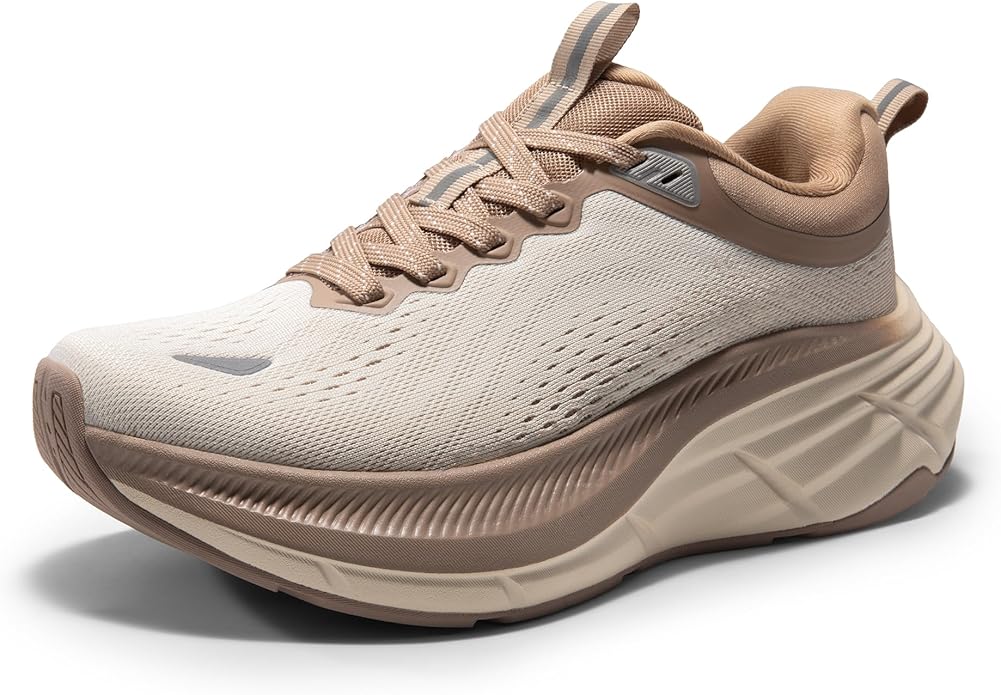
4. Upper Breathability
The upper is the top part of the shoe that wraps your foot. It needs to be durable but also allow air circulation. Stuffy feet mean more sweat, blisters, and discomfort.
Modern shoes use technical mesh that balances durability and ventilation. Some have more open mesh for maximum breathability, others use layers for more support.
What to look for in the upper:
- Mesh with visible weave (indicates good ventilation)
- Reinforcements only in critical areas (toe box and heel)
- Absence of internal seams that can cause friction
- Anatomical shape that follows the foot's natural contour
In hot climates or for heavy sweaters, prioritize models with more open mesh. On cold days or trails, slightly more closed uppers offer better protection.
5. Outsole Durability
The outsole is your connection to the ground. It needs to offer traction, protect your foot from irregular surfaces, and last hundreds of miles.
Most outsoles use carbon rubber which is extremely durable. Some premium models have special outsoles like Continental (from Adidas) that offers exceptional traction.
Signs of good outsole:
- High-density rubber in high-wear areas (heel and forefoot)
- Traction pattern appropriate for your use (more aggressive for trail, smoother for pavement)
- Flexibility in toe region without compromising structure
- Adequate thickness (not too thin that wears fast)
The average lifespan of a running shoe is 300-500 miles. For walking, it can reach 600 miles. Regularly inspect outsole wear and replace when necessary.
Fatal Mistakes That Hurt Your Joints
Some mistakes in choosing and using shoes may seem harmless at first. But they have a cumulative effect that results in serious injuries. I'll show you the most common ones so you can avoid them.
Using the Same Shoes for Everything
You use the same shoes for walking, running, gym, and daily wear? This is a classic mistake that drastically shortens footwear lifespan and increases injury risk.
Each activity requires specific shoe characteristics. Weightlifting needs flat, firm soles for stability. Running requires cushioning and flexibility. Casual use doesn't have these demands.
Why this is harmful:
- Cushioning loses efficiency faster with continuous use
- The midsole doesn't have time to recover between uses
- You force the shoe into movements it wasn't designed for
- Durability drops from 500 miles to less than 250 miles
Ideally, have at least two pairs of shoes: one for running/walking and another for casual use. If you train daily, alternate between two pairs to give the material time to recover. Learning about different training types can help you understand why activity-specific footwear matters.
Ignoring Pronation Type
Buying shoes without considering your pronation type is like driving with misaligned wheels: it works, but damages things gradually.
Many people choose shoes by brand or appearance, completely ignoring whether the model suits their biomechanics. The result appears weeks or months later: knee pain, inflamed Achilles tendon, plantar fasciitis.
Real consequences:
- Overpronators using neutral shoes develop inner knee pain in 70% of cases
- Supinators with stability shoes have 3x more ankle sprains
- Improper pronation forces muscular compensations causing secondary injuries
- Injury treatment costs average $600-2,000
Good news is identifying your pronation is simple and free. Many specialty stores offer evaluation without obligation. Invest 15 minutes in this before buying.
Skimping on Quality
Super cheap running shoes are shooting yourself in the foot. Literally. Very basic models don't have the technologies needed to protect your joints during repetitive impacts.
I'm not saying you need the most expensive model. But there are quality floors you shouldn't go below. Shoes under $50 generally don't have adequate cushioning or durability.
What you lose in very cheap shoes:
- Basic cushioning that doesn't absorb impacts adequately
- Outsole that wears in 125-190 miles
- Upper that peels or tears easily
- Lack of support increasing sprain risk
The false economy is real: a $50 shoe that lasts 3 months costs more than a $120 shoe lasting 10 months. Not counting injury risk that can cost way more.
For beginners, the $70-$140 range offers excellent value with adequate technologies. Quality whey protein and proper footwear together support your fitness journey.
Using Worn-Out Shoes
This is perhaps the most dangerous mistake. Many people keep using clearly worn-out shoes because they "still work," "have no holes," or "still look good."
The problem is cushioning deteriorates long before obvious external signs. You might have a shoe that looks okay but has already lost 60% of its impact absorption capacity.
Signs it's time to replace:
- You've covered 300+ miles since purchase
- Sole worn unevenly or with smooth areas
- Midsole with permanent creases or stiffer than before
- Upper with tears, peeling, or lost shape
- Pain that didn't exist starts appearing
A simple test: compare your current shoe with a new one from the same brand. If the difference in cushioning is noticeable when pressing, it's time to replace.

Buying Wrong Size
Shoes too tight or too loose cause immediate and future problems. Tight causes blisters, ingrown toenails, and toe pressure. Loose allows excessive movement generating friction and instability.
Many people buy the size they use in dress shoes. Fatal mistake. Your foot swells during exercise and needs space to expand.
Golden rule for sizing:
- Should be 0.4-0.6 inches (thumb width) between your big toe and shoe tip
- Heel should stay firm without slipping
- Width should allow toe movement without squeezing sides
- Always try on late in day when foot is more swollen
Brands have slightly different sizing. A size 10 Nike might not equal a size 10 ASICS. Always try on, even if you know the brand.
Size Guide: How to Get the Perfect Fit
Perfect shoe fit is as important as choosing the right model. An excellent shoe in the wrong size becomes useless and even harmful.
The Thumb Space Rule
When you put on the shoe, there should be approximately a thumb's width of space between your big toe and the shoe tip. This equals about 0.4-0.6 inches.
This space is essential because your foot expands during exercise. Increased body temperature and blood flow make the foot swell slightly. Without adequate space, your toes get compressed.
How to test proper space:
- Put on shoe and tie firmly as you'd use it
- Stand up (foot lengthens when supporting weight)
- Gently press shoe tip
- Should feel where your big toe ends with at least 0.4 inches spare
- Your toes should move comfortably inside the shoe
If you do long runs or trails with descents, consider leaving up to 0.6 inches clearance. On descents, feet slide forward and toes without space suffer.
Proper Shoe Width
Many people only worry about length and forget width. Too narrow shoes compress toes laterally, causing bunions and calluses. Too wide allows excessive movement and blisters.
When fitted correctly, you should be able to move your toes without feeling side pressure. At the same time, the midfoot should be secure without excessive looseness.
Width classification:
- B (narrow): For thin feet, typically women's
- D (medium): Men's standard and some women's
- 2E (wide): For wider feet
- 4E (extra wide): For very wide feet or orthopedic issues
If you always feel lateral tightness in shoes, look for brands offering different width models. New Balance and ASICS are known for this variety.
Heel Fit
The heel is the shoe's control point. It needs to stay firm but comfortable, without slipping during movement but without squeezing excessively.
A simple test: with the shoe tied, try removing your foot without untying. Should be possible but with some resistance. If it comes out too easily, it's too loose. If it doesn't come out at all, might be too tight.
Signs of correct heel fit:
- Feeling of security without excessive pressure
- Zero slipping when walking or running in place
- Absence of friction that can cause blisters
- Sufficient padding in collar (upper edge)
If heel slips even with firm tying, try different lacing techniques or consider insoles. Sometimes the problem isn't size but your heel shape.
Best Time to Try On
Always try on shoes late in the day, ideally after 4 PM. At this time, your feet are at maximum size due to natural swelling that happens throughout the day.
If you try on in the morning when feet are smaller, you might end up buying a size that'll be tight during your workouts. This is a very common mistake.
Practical tips for trying on:
- Bring socks you use for running (never try barefoot)
- Try both feet (one is commonly slightly larger)
- Walk around the store for at least 5 minutes
- If possible, jog in place or on treadmill
- Trust comfort: if something bothers in store, it'll bother much more during workouts
Remember: shoe sizing varies between brands and even between models of the same brand. Never buy online without being sure of the exact size in that specific model. Many specialty running stores offer generous return policies, so don't hesitate to test shoes on a short run before committing. For overall fitness guidance, check our weight loss guide to complement your cardio routine.
Aspect | Correct Size | Too Small | Too Large |
|---|---|---|---|
Toe Box | 0.4-0.6" clearance | Toes touch tip | More than 0.8" clearance |
Heel | Firm without slipping | Excessive pressure | Slips when walking |
Width | Toes move freely | Lateral compression | Excessive movement |
Arch | Support in right place | Pressure on arch | Lack of support |
Maintenance: Extend Your Shoes' Lifespan
Properly caring for your shoes can double their lifespan. Besides saving money, you ensure cushioning and support remain efficient longer.
Here’s how to keep your walking or running shoes performing like new:
- Rotate pairs: Avoid using the same shoes every day. Alternating pairs allows the foam to fully decompress and recover.
- Air dry only: Never put shoes in the dryer or under direct sunlight. Heat breaks down cushioning materials and weakens glue.
- Clean gently: Remove insoles and laces. Use a soft brush, mild soap, and cold water. Let them air dry naturally.
- Use them for their purpose: Don’t wear running shoes for casual daily errands or gym workouts. Each extra mile of non-intended use shortens their lifespan.
- Store correctly: Keep shoes in a cool, dry place. Avoid damp areas that encourage bacteria and odor.

Frequently Asked Questions
Can I use the same shoes for walking and running?
Yes, you can use the same shoes for both activities, as long as they have good cushioning and proper support. For beginners who alternate between walking and running, a running shoe offers the necessary protection for both. However, more experienced runners might benefit from activity-specific models.
What's the main difference between walking and running shoes?
The main difference is in cushioning and weight. Running shoes have more intense cushioning (especially in the heel), are lighter, and have more flexible outsoles to absorb impacts up to 3 times your body weight. Walking shoes prioritize stability, durability, and have slightly stiffer soles.
How do I know my pronation type?
You can identify your pronation type by checking the wear pattern on an old pair of shoes. Wear on the inner side indicates overpronation, on the outer side indicates supination, and in the center indicates neutral pronation. For more accuracy, get evaluated by a physical therapist or at specialty running stores that offer free gait analysis.
How much should I spend on good shoes?
For beginners, shoes between $70–$140 offer excellent value with adequate technologies. Intermediate runners can invest $140–$250, while advanced athletes benefit from premium models above $250. The most important factor is comfort and proper fit for your pronation type.
How often should I replace my shoes?
Replace your shoes every 300–500 miles or every 6 months of regular use. Signs like loss of cushioning, visible outsole wear, discomfort during use, or joint pain that didn't exist before indicate it's time for a new pair.
What is shoe drop and which should I choose?
Drop is the height difference between the heel and forefoot of the shoe. High drop (10–12mm) favors heel strikers and is ideal for beginners. Medium drop (6–8mm) balances comfort and naturalness. Low drop (0–4mm) promotes a more natural midfoot strike but requires gradual adaptation.
Can I use running shoes for the gym?
Not ideal for weightlifting and functional training. Running shoes are made for linear movements and may not offer the lateral stability needed for weight exercises. For gym workouts, choose shoes with flatter, firmer soles that provide better base for lifting and multi-directional movements.

Conclusion
Choosing the right shoes isn’t just about comfort—it’s about protecting your joints, improving performance, and preventing long-term injuries. Walking and running place very different demands on your body, and your footwear should reflect that reality.
When you understand your pronation type, select the correct cushioning and drop, avoid common mistakes, and maintain your shoes properly, you turn footwear into a performance ally instead of a liability.
If there’s one golden rule, it’s this: the best shoe is the one that fits your body, your activity, and your goals—not the most expensive or the most popular.
Invest wisely, listen to your body, and your feet (and knees, hips, and back) will thank you mile after mile.